Category Archives: Adventure

O’er Hill and Dale to Haines

Dearest Reader,

What I am about to recount is greater in grandeur than I ever suspected when I packed up everything I owned into one vehicle and left Fairbanks, Alaska to move to Hoonah. I found the road from Fairbanks to Haines was filled with wildlife, mountains, signs of spring, joy-inducing beauty, and adventure if I sought it. Herein lies the account of my travels.

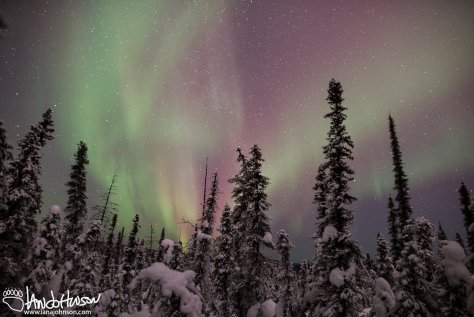
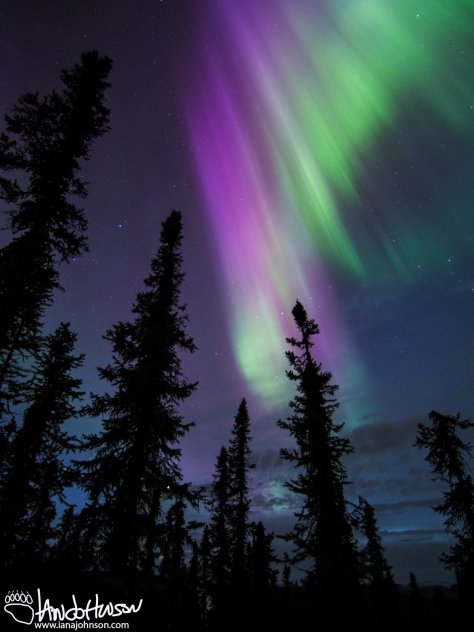
Of the Aurora Borealis, I cannot speak more highly of its beauty and grace. From my perch above Castner Glacier, just south of Delta Junction, Alaska, I watched the blues and gold of the sunset fade away. Clear skies danced with twinkling stars, and a brilliant full moon hung in the sky; it was nearly to bright to look at. From my ridge post, I looked far up the valley to the illuminated peaks of the Alaska Range. Directly in front of me, the looming face of the glacier was hidden in the shadow of the valley. Its ice was banded with layers of sediment and polished clean by the winds which occasionally blow violently down the valley. Fortunately, on this night there was not even a breath of wind. Eventually the aurora built to such proportions that it arched over the full glacier. It danced in pinks in green that must have released many positive endorphins inside of me, for I felt very calm and at peace.

Kluane Lake in the Yukon Territory is an enchanting valley of ice. The morning after I arrived, I stood on the ice in the pre-dawn to watch the sunrise. Surrounded by high mountains on each side, the sun takes a long time to break the plane of the mountains. Slowly the mountains to the west were lit in an ethereal orange light until the sun broke the ragged edges of the mountains to the east.  At that point the light turned white and the day had begun. At the southern extremes of Kluane Lake I found many big-horn sheep. Although none of them had the large, signature curls of a mature ram, it was fun to watch the kids and ewes feed along the mountainside. A wildlife bonus was watching the crossing of two coyotes across the center of the lake. They were dwarfed by the magnitude of the mountains.

Along Kluane National Park I surprised to see the first signs of spring in the Taiga. Willows were opening their fuzzy buds, and even small rivers were beginning to open and trickle through the snow.  I met the most enchanting little bird along the waters of a fast moving river. An American Dipper was feeding for fish from along a small ice flow. It dipped and bobbed its butt in the signature dance move of the small bird.

From the river bottoms of Kluane National Park I climbed into the enchanting winter-wonderland of Haines Pass, at about 3,500 feet. Up there, tyrannical winter was still in full control with only a few inklings that spring had a foothold. Much like the high arctic,most large trees were relegated to river bottoms out of the wind. Although prime habitat for the all-white Willow Ptarmigan, I saw only a few. Snow accumulation, to my best estimate, was around 6 or 7 feet in the pass. I was fortunate the road was cleared and the day so beautiful! The mountains landscape was truly more than I expected, and I say without pause that its beauty was intoxicating!

I descended to Haines, Alaska where it was evident that Spring was fortifying itself for a full on attack on Winter in the highlands. In Haines, the rivers flowed with vigor, and the mountains accented them by reflecting vigorously from the shimmering surface. I found that Haines in the night was  perhaps even more beautiful than in the daytime. Jutting mountains stuck up from behind the city and lit by a full moon it was truly a sight to behold. Seeing as this was the first time I have seen Haines, this will likely be how I always remember it!

Well, dearest Reader, I hope you have enjoyed the account of my trip from Fairbanks to Haines. I do hope you have the opportunity to partake in it someday and extend upon the numerous opportunities of which I have only scratched the surface. The images below may also help tell the story as they are set chronologically from my departure to my arrival.

Sincerely,

A New Southeasterner

Into the Alaskan Night

This winter, and the winter before that, and the winter before that, I spent more time outside in the darkness than I did in the sun. It is the nature of living in a land where the Lights in the darkness outshine in beauty the pleasure of the sun’s flare.  I have found tremendous joy, solace, quiet, and refuge in watching the Aurora Borealis sway and bend across the northern sky, and documenting the Northern Lights has been an endeavor that has kept me up hundreds of hours. Locked away in terabytes of pixels are the proof of my labors. The images that I hold will be a legacy to pass on to my children and perhaps to my grandchildren. It is possible the pictures I have taken will even document change in the Arctic as our climate warms and the landscape transitions to something else.

I have learned more than I can measure about the natural world in Fairbanks because the Arctic is a deceptively complex place, and it is rapidly changing. There are many examples of its uniqueness. Its ecosystem has evolved to support wildlife at extreme temperatures from -60F to 80F. A highlight of its incredible diversity and unique importance are the hundreds of species of birds that return there each year from several continents to breed. Without the Arctic as a breeding ground, populations of waterfowl would be vastly diminished. To create the right conditions to support life for a short summer, the input energy into the system has to be massive, and the never-setting Midnight is the catalyst that fuels the prolifery. From its heat and light rise the microbes,plants, insects, and small mammals which fuel an entire ecosystem that provides resources for those animals and humans that live in it, as well as humans who profit from its export to other regions of the world. The Arctic has become a land which I look forward to returning to, as there is still so much to learn about and see!

At the end of every  night comes the dawn. A chance for the world to be seen in a different light, from a new perspective. I have been incredibly blessed with the opportunity to experience the wonders of Interior Alaska, but along with the moving world, I will be shifting my life to Hoonah, Alaska. In Southeast Alaska along the coast, I look forward to plying the sea for salmon and watching its waters for whales, otters in seals. With endless photographic opportunity in the region, I am thrilled to show you and write about the resource rich world of Southeast!

This season’s Aurora Borealis Time-Lapse, “Into the Alaskan Night”, comes not at the end of the Aurora Season but at the end of my time in Fairbanks. In a way, its production is a piece of closure of my life in the interior as I move to Hoonah, Alaska, where I look forward to wandering into the night.

2016 World Ice Art Competition

The 2016 World Ice Art Championship has just finished up by unveiling the multi-block results, and for the third year in a row the creativity of the carvers and the results of polished ice have left me speechless. In one word, the sculptures are “awesome”. However, it would take a plethora of adjectives spanning  the alphabet from Astounding to Zestful to capture everything they have to offer. This year, more than ever, I was amazed by the minute details that each carving contained. The attention to the micro aspects of the carving contributed to the entirety of the piece in ways that can only be appreciated once you have stared at each sculpture for awhile. The refracting light off a lizard is because of the individually carved scales, the polish of a perfect sphere warps the scenery behind it, or a martian equipped with an astronaut has a face inside of the helmet. It is evident the amount of work that the artists put into their work to achieve greatness.

After three years of attending this event I have been struck by the variety of sculptures made. As I wrote this article, it has been a real treat to review the artwork of the 2014 World Ice Art Championships and the 2015 World Ice Art Championships. From that, I am reminded that each Abstract submission is fresh in its ingenuity and content. It seems the creativity artists who submit their art to this event are limitless in their ability to mold and shape ice into surreal scenes. Similarly, the Realistic submissions recreate in ice what would seem difficult with a more stable medium like stone or wood. The first place winner of the Single Block competition this year put together an acrobat performer so realistic that if given clothes and some music, she should have stood up, grabbed the sixteen inch ring from her toes, taken a bow, and the audience would have stood in a standing ovation.

It was a joy this year to have my parents with as first-time visitors to the Ice Art Competition. Their reaction the incredible beauty and uniqueness of this event was a joy to be a part of! As a long-time photographer himself, some of the images below were contributed by my dad, Chuck Johnson, as well.

Single Block

In the single block competition, a lone, 8x5x3 foot block of ice is transformed into unbelievable sculptures of giant proportions. The artists creatively slice-and-dice and weld the ice back together to extend the sculpture in 360 degrees.  They may be set firmly on the ground or perch precariously on a small base. The attention to detail is key and many of these sculptures seem to come to life, or at least you wish they were real!

Multi-Block

The Multi-block competition is combines attention to detail and designing large scenes. Competitors transform up to ten, 6x4x3 foot blocks of ice into towering sculptures of up to 25 feet or sprawling scenes. I was particularly drawn to the sculpture scene from Cinderella which won first place realistic. In it, the Prince stands near the viewer and beckons Cinderella down a ten foot stair case just as the clock strikes midnight. Her expression as her glass-slippered foot hangs over the last step and his demeanor make the carving to alive. Truly enchanting!

A Bird in the Bush, Aurora

I have a  story to tell about the kind of thing that only happens once in a lifetime. Last night I arrived home at 1AM from an amazing night of aurora watching with my parents – their first in Alaska! The forecast, a level 2, tripled to a KP 6 with an unexpected shock passage of energy.  Throughout the night the Lights waxed and waned until the entire sky was covered from the southern constellation Orion’s Belt through the north star  and to the northern horizon. Throughout the sky the Aurora Borealis shifted and rippled in green curtains of light. Outside of my car at my house, a dancing corona erupted over my head so I quickly snagged my camera and sprinted for the ski trails behind my house to begin shooting. It was as I stepped into the woods that the remarkable part of this story began to unfold.

Aurora Family Portrait
A successful night of aurora chasing!

I was making no attempt to conceal the heavy pound of my foot steps, and my first few steps into the woods were loud enough to wake a grouse which was sleeping along the trail. It started from its slumber, and with rapid flaps, thundered its wings just a few feet from me. I jumped high at the sound in a blind moment of panic  thinking for a second it was a moose. As I gained my composure I noted where it landed in a spruce tree only about 15 feet from me. I turned my headlamp in that direction, and the beady, black eye of an immature Ruffed-grouse glinted at me. The opportunity to shoot wildlife underneath the aurora has always been a desire of mine and I was keen to take advantage of it here! I set up my camera and began to shoot, hoping to capture the scene. My shutter clicked twice and the grouse stayed in place, although I’m surprised the sound of my pounding heart boosted by adrenaline in my ears did not spook it. My shutter clicked a few more times and I boldly moved towards the grouse. With each crunch of snow underfoot, I moved closer, and closer, and closer. The grouse, either too scared to move or over-confident in his camouflage did not move a muscle and soon my camera sat only 18 inches from the nervous bird. Overhead the aurora was still brilliant and as my shutter clicked I pulled off an image that may truly be the first in the world – a wild Ruffed Grouse perched under the shimmering emerald of the Alaskan Aurora Borealis.

Ruffed Grouse Aurora Borealis
The immature Ruffed-Grouse that I stirred up eyes me from the shadow of a spruce tree.
Ruffed Grouse Northern Lights
A Ruffed Grouses sits extremely close to my camera – a 12mm lens gives the shot an incredible angle!

It is amazing that the grouse did not fly away. I think it was a combination of the pure confusion of the moment, the shine of my light, and the benefit of the darkness. Perhaps he had convinced himself that even though I was so close, I had not noticed his presence.  However, eventually he decided that enough was enough. He could watch the aurora without such nosy neighbors and took off into the night leaving me to revel in the unbelievable encounter.

Ruffed Grouse Aurora
The Ruffed Grouse gives me one more glance before taking off into the night.

The Galaxy Rises in Alaska

Growing up in Minnesota one of my favorite constellations was Orion. The appearance of his belt at earth’s horizon was a sure sign that autumn was approaching, and as I fell asleep each night I would watch him out my southern facing window. Many people, cultures, and seasons are tied to the position of the stars. In Alaska and as a night-photographer, I have grown to appreciate the rise of the Milky Way Galaxy to the north as spring approaches. Although at least a part of the Milky Way is visible through the winter, its growing prominence and brightness in February and March really documents the changing season. The Milky Way rises through the summer, but by the time we are able to see into the center of the Galaxy the sun will never set! Of course, the sun blots out any opportunity to see the center of the Milky Way from Fairbanks, Alaska.

Earlier in the night (about 10 PM) the galaxy was very bright and intersected a red and green display of the Northern Lights.

I have been researching and “perfecting” techniques (lots of room for growth and creativity!) to stitch together large panoramas. The images here were created from stitched 25 – 32 images. The results are certainly  interesting and beautiful! My goal when creating these images is to capture as much of the Milky Way as possible. On moonless nights like March 2nd in Fairbanks, Alaska the Milky Way shows up as a bright band in the sky. With some luck, the aurora accents its celestial beauty. As part of the Panoramic technique the resolution of the image grows to extreme proportions. These panoramas here are approximately 21,480 x 10,850 pixels! That’s nearly 233 megapixel resolution! The power of the technique the possibility of wall-sized panoramic prints. Hint, hint – I would love to see one of these printed to 50″ or bigger! If you are are interested, you should contact me!

A lone birch stands as the focal points of this large panorama. The city lights of Fairbanks show up on the right.
A large panorama showing off the Galaxy and the Aurora Borealis over Black Spruce Dogsledding.

From a bit purer side of photography, I was also able to capture the galaxy and aurora in single images. However, there is an interesting distinction in them over many of my other aurora shots – they are no longer “real”. I am a stickler for not over-processing aurora shots to  give the viewer the truest colors and most accurate representation as possible. However, to emphasize the galaxy it necessary to compromise on the color of the aurora. The aurora in these single shots and the panoramas is more vibrant than it was to the naked on this night.  Because of the color changes these are truly “works of art”, not just documentation of the aurora.  Its not a bad thing, but I feel should be made clear, as there is a growing opinion that aurora photography does not represent how it truly looks. In this particular case, that is true.

A bright section of aurora hightlights a beautiful scene capturing the Milky Way over the sleds at Blackspruce Dogsledding
A fusion of the northern lights and the Milky Way Galaxy at Black Spruce Dog Sledding.
Star Trails
A long star trails shows off the multitude of stars on a moonless night in Fairbanks, Alaska.

Northern Accents

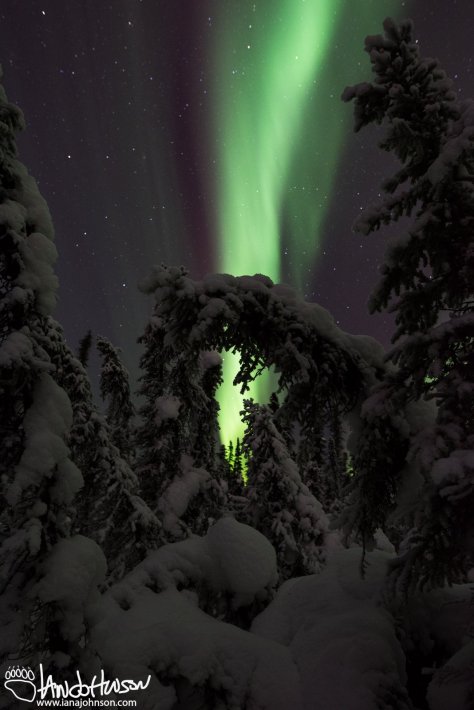
It was negative 5 degrees Fahrenheit in Fairbanks, Alaska as I stepped outside to engage in my photographic addiction : capturing the northern lights. I set off into the night, stomped a trail through knee-deep snow, and tripped on a hidden tree. The trip loosened up a signature item of the black spruce bog that I was walking in; a four foot Black Spruce tree encased in snow. Around me arranged in clumps and with varying snow loads were hundreds of Black Spruces. Each layer of snow deposited through the winter hung heavily on each tree.  Some of them sustained the burden of winter and maintained their dignity by standing upright, however, many bowed over in graceful arcs waiting for the warmth of spring to set them free. The beautiful landscape I stood in was classic to the interior of Alaska in the boreal forest. On this night I was in luck, the aurora started up and with my camera and mind racing I began to take pictures that fused together two iconic elements of interior Alaska.

I began photographing the aurora borealis three years ago and since then have continued to morph my skills and technique. It is actually pretty amazing to consider the transition that my photography has gone through as I began to realize that although the northern lights are stunning they are only an accent to unique landscape. I began to focus less on tack-sharp stars and large vistas and more on the foreground elements. I no longer only seek tall “domes” (i.e., mountains, hills) to stake out my my tripod. Instead I often look for integral pieces of the landscape that epitomize it and place them close and directly in front of my camera. In order to capture landscapes like these I change my techniques. My camera and tripod are almost always at ‘snow level’ to take advantage of unique angles, and I set up only a few feet from the object in front of me. A bulbous, snow-covered black spruce only two feet away becomes the tack-sharp focus that the eye is pulled to. The dreamy and soft aurora and stars  provide the lighting that help pull out the essence of the landscape. They are punctuation to the beauty which lies all around.

In the age of digital photography that makes capturing the northern lights “easy”, I offer this article as a challenge to photographers to think outside of the box when shooting the aurora. You may find that it provides inspiration to your work and a beautiful twist to an astounding phenomenon.

Northern Archway
I chose this archway of spruces to photograph the aurora in. I was intent on capturing the aurora in a way that complimented their shape.
Window to the Northern Lights
I got closer to the archway and was thrilled by the aurora that dance in this natural window.
Northern Lights
Bulbous, snow-covered spruces and a framework and a dead spruce are set by the aurora borealis.
Aurora Borealis
A window to the aurora beyond.
Northern Lights
A broad vista of red and green aurora in Fairbanks.
Northern Lights Archway
Northern lights in an archway of black spruces.

Northern lights archway Aurora Borealis Panorama Alaska, Aurora Borealis Spruce, Northern Lights, Black Spruce Aurora Borealis Alaska Fairbanks Winter Snow Northern Lights Black Spruce Alaska Aurora Borealis and black spruces Northern Lights, Black Spruces, Bog


A Superior Coast of Stone and Ice

I do not know why the stark beauty of the Lake Superior coast surprised me so much; before, I had lived on its shores four years. In front of me, the grey sky mirrored the pale ice of the shoreline, and as I walked to the edge of Gitchigumi’s  ice encased coast at Gooseberry State Park I was captivated. Short waves in the small cove which curled out in front of me lapped at the shoreline and imperceptibly built up icicles that hung from ice ledges. The icicles were shaped like alligator teeth and seemed to dangle from the frozen mouth of a gigantic beast. Every rock was encased in a sheet of ice built  up one splash of water at a time. A careful cross-section of ice from on top of the rock would reveal that stone was at the core of an arctic onion.

The ice was inspiring to look at from a macro and micro scale. By getting close and touching my nose to the ice, I observed some the miniscule details contributing to the grand-scale beauty.  On the rocks, a result of the layers of water was gray-and-white banded textures mimicking the agates Lake Superior is so famous for. They were polished to perfection.  Colorful yellow lichens, tufted grasses, and rich green mosses were preserved on the rocks behind clear windows of curved ice. The magnifying effect of the curve threw pieces of the lichen out of proportion, and the the splashes of bright color they provided were in stark contrast to the granite. As I pressed my face close and looked,  it was impossible to guess how some of the textures had formed. In some instances, it seemed that some of the small pebbles trapped in the ice had received just enough sun to melt and separate themselves. The small void they left above their surface was filled with alternating grains and patterns. Reflecting on it now, everything looks a bit different when you observe the essence of a landscape.

One of the greatest joys of the afternoon was when the sun dissolved through the flat gray skies as a radiant sunset. The grey ice ledges and icicles no longer blended into the background colors of the horizon but instead reflected and bounced the many colors of the  sky. The Lake Superior coast was transformed. Translucent icicles absorbed and emitted the sunset’s light. Rays of sun illuminated the rock islands encased in ice.  Blue skies and orange clouds floated overhead and were pushed by the wind. Throughout it all I counted my blessings and documented its beauty. As the sun finally set I returned to my car feeling like I had been at just the right place, at just the right time.

Sunset on the Iice
The sunset bounces off the curved icy bubbles on the shoreline.
Sunset Emitted
These small icicles absorb and seem to emit the colors of the sunset behind them.
Flat Waters?
You may have noticed throughout the post that the water of Lake Superior was flat. That is due to a the long exposures that I used to emphasize the beauty of the ice. This image does not use a long exposure and shows a small wave breaking over the rocks.


Creating an Image 365

For the last year I have strapped my camera to my back, placed it in my backpack, or put it in the front seat of my truck to meet my goal of taking a picture a day for 365 days. My intent of the project was to simply take a picture each day to improve my photography skills. Looking at the results I am shocked by how the project changed my view of photography and my photography skillset.

30 days in the project I was already starting to feel that I was repeating the same shots days after day. The constant feeling of the need to do something different each day forced my growth as a photographer. It was critical  I go out of my comfort zone of wildlife and landscapes by taking advantage nearly any shot that presented itself and finding an opportunity when there was an obvious one. The greatest lessons I learned was defining the difference between “taking a picture” and “creating an image”. I think creating an image captures the essence of the object or the moment and is ultimately at the heart of the what brings me joy in photography and continues to make it interesting. The difference seems subtle, but to illustrate it,  standing parallel to the horizon and taking a picture of the sunset is different than making an image of that same sunset by adding in the reflection of the water through the trees. By creating an image, you can tell a story through photography. That became my goal as the days ticked on by.

The results of this project provided a picture diary for a year. Be sure to flip through full gallery from January 1st – December 31st, 2015 here . As I flipped through them it was a trip down memory lane. I selected images  exemplifying essential lessons I learned from this project. Many of them are connected to each other and all of them helped me create an image rather than just take a picture.

10 Takeaways When Creating an Image

  1. A portable system is a huge benefit.  First and foremost I really appreciated the portability of my Olympus OMD Micro 4/3 system. The small size enabled me to carry a full featured camera and an array of lenses everywhere that I went.  That portable system helped me take advantage of the opportunity to capture this Sharp-Shinned Hawk. I was biking to the office when I encountered it and was able to snap a great moment.
July 30th : Sharp-shinned Hawk

2. Take an opportunity when you have it. I learned really quickly that if you intend to take a picture every single day, it is absolutely critical to capture an image regardless of the cost. Okay, I am definitely being a bit facetious, but this particular sunrise caused a five-minute tardiness on my way to class. It was just too beautiful to pass up, and I needed time to set up a tripod!

February 2nd : Sunrise over the University of Alaska Fairbank's ice climbing wall
February 2nd : Sunrise over the University of Alaska Fairbank’s ice climbing wall

3. Be creative. I often mounted only a single lens to my camera, and then forced myself to capture an image with that lens. In line with taking advantage of an opportunity (see #2), it is was also necessary to look for opportunities.  The particular image below was created because I had an f/1.0 50mm lens. I knew that depth of field would enable me to have tack-sharp pieces of an image, and a soft background which I think was effective in this skull image.

January 21st : Empty your mind.

4. Diversify by taking advantage of all forms of photography. As I searched for shots, I extended into photography that is not my bread-and-butter wildlife or landscapes. Learning to set up food shots, portraits, and composites all helped build my photography skill set.

June 17th : Anniversary!

5. Light is everything. Photography is the “art of capturing light”, and living in Fairbanks, Alaska most of the year presented a significant challenge in the winter months. Short days ensured that if I was going to take advantage of an opportunity (see #2) in the daylight I had to be quick. I also had to get creative (see # 3) on cloudy days by either moving indoors or finding a shot that worked in flat light.

September 9th : Golden Birches

6. Make something out of nothing. There were a lot of cloudy, dark days where I never got the opportunity to take an image outside. If that was the case, it was time to be creative (see #3) by designing indoor scenes, capturing phenomena in the dark (aurora borealis, moon, or stars). I dug around in the kitchen and provided some side-lighting for this scene (see #4 on diversity). In these situations my goal was creatively create an image.

November 24th : Cooking Essentials

7. Have fun editing. As a wildlife photographer I often consider my work to be documentation, rather than art. I would point to a critical difference that documentation should represent the subject closely whereas art is the utilization of creative license. It was a new realm for me to experiment within Adobe Photoshop and Lightroom to manipulate imagery and create art out of them. Often I used effects to emphasize the subject of the image.

June 3rd : Bluebells

8. Take advantage of your cameras settings. I pulled up to the train tracks right as the arms went down in front of me. I had not taken a picture yet (see #2) and was drawn to the stationary cross arm. Rather than “stop” the train, I slow down my shutter speed and stabilized my camera on the dash of my car. By taking advantage of my cameras settings I was able to capture an interesting shot showing motion.

August 10th : Waiting for the train to pass

9. You won’t always knock it out of the fence. It’s inescapable that poor lighting (see #5) and not taking advantage of an opportunity (see #2) will result in a less than optimal image. That’s OK!! I found the most important aspect of this challenge was to find an object and capture it in the most interesting way possible by taking advantage of interesting angles or the camera’s settings (see #8).

July 18th : Sawyer's tools
July 18th : Sawyer’s tools

10. Learn from your mistakes. Mistakes are beyond the realm of “not knocking it out of the park” (see #9).  Mistakes are fine unless you only have one image from the day.  The image below is a mistake that was meant to be a starspin. However, I learned why the image did not work (see #8), so that I would not repeat it in the future.

September 23rd : Light pollution

In summary, this project provided incredible growth for me. A photography growth spurt if you will. The results created a photo journal of an entire year of my life and I hope that you can take away  a few key points along with enjoying the imagery of my self-imposed assignment! Just in case you missed it, you can review the full gallery HERE!

Top Shots 2015

Hello Everyone! 2015 was a great, great year. Traveling took me from the North Slope of Alaska  to the southern coast of Texas. Professionally I am headed back to the “real world” after completing my thesis in December, and will enjoying a married life by mid-summer! The images below are some of my Top Shots from 2015. If there was a blog post associated with the image I included it in the caption. I hope you enjoy.

If you have enjoyed the blog this year please take the time to pass it on to a friend who would enjoy it too, and encourage them to sign up for the emails. Thanks all!

Aurora Borealis

The Aurora Borealis has become an addiction of mine, and these two particular some of my favorites from the season.

Sun-kissed Aurora, Fairbanks, Alaska
Sun-kissed Aurora, Fairbanks, Alaska (https://ianajohnson.com/the-sun-kissed-aurora/)
Aurora and a moonset, Fairbanks, Alaska
Aurora and a moonset, Fairbanks, Alaska  (https://ianajohnson.com/the-negative-40f-aurora-club/)


Dog Sledding

Dog sledding in Alaska has been a tremendous treat, and there couldn’t be a better mentor than my friend Jeff Deeter at Black Spruce Dog Sledding.

George, taking a break on the trail. Fairbanks, Alaska
"Picket" at the Crowberry Public Use Cabin, White Mountains, Alaska
“Picket” at the Crowberry Public Use Cabin, White Mountains, Alaska (https://ianajohnson.com/by-a-team-of-seven-into-heaven/)

Landscapes

These array of landscape shots capture the beauty and phenomena of Alaska and beyond.

Alaska Range in the pre-dawn. Donnelly Creek, Alaska
Alaska Range in the pre-dawn. Donnelly Creek, Alaska (https://ianajohnson.com/highlights-of-an-alaskan-bird-a-thon/)
Inside Mendenhall Glacier, Juneau, Alaska
Inside Mendenhall Glacier, Juneau, Alaska (https://ianajohnson.com/into-the-mouth-of-an-ice-beast/)
Star-trails in a winter wonderland, Fairbanks, Alaska
Windy day and a half moon at Polychrome Pass, Denali National Park, Alaska
Windy day and a half moon at Polychrome Pass, Denali National Park, Alaska (https://ianajohnson.com/a-portrait-of-the-great-one/)
Mount Denali Panorama, Denali National Park, Alaska
Mount Denali Panorama, Denali National Park, Alaska (https://ianajohnson.com/a-portrait-of-the-great-one/)
Matanuska Glacier, Alaska
Matanuska Glacier, Alaska (https://ianajohnson.com/matanuska-glacier-peril/)
Summer Solstice on the North Slope, Galbraith Lake, Alaska
Summer Solstice on the North Slope, Galbraith Lake, Alaska (https://ianajohnson.com/solstice-solitude-soliloquy/)
Thunderstorm at the Lake, Minnesota
Thunderstorm at the Lake, Minnesota (https://ianajohnson.com/thunderstorm-at-the-lake/)

Wildlife

From the bottom of tide pools to the tops of mountains, it has been a great year to shoot wildlife!

Breaching Humpback Whale, Seward, Alaska
Breaching Humpback Whale, Seward, Alaska (https://ianajohnson.com/a-whale-of-tale/)
Anemone in a tide-pool. Homer, Alaska
Anemone in a tide-pool. Homer, Alaska (https://ianajohnson.com/on-the-beaches-of-homer/)
American Golden Plover, North Slope, Alaska
Northern Hawk Owl, Dalton Highway, Alaska
Caribou, Denali National Park
Willow Ptarmigan, Denali Highway, Alaska
Woodfrog, Fairbanks, Alaska
Woodfrog, Fairbanks, Alaska (https://ianajohnson.com/a-wood-frog-blog/)
Sandhill Crane Silhouette
Ruby-throated Hummingbird
Green Wing Teal
Green-wing Teal, Porcupine River, Alaska (https://ianajohnson.com/go-when-the-river-says-go/)
Cross Fox
Cross Fox in Fort Yukon, Alaska.

Flowers

Fireweed are iconic to Alaska, and I love how a single stalk seems to stand out above the others here.

Standing out.
A broad field of fireweed where one seems to stand out over the rest.
Single Lily
A single white lily in Minnesota.

Miscellaneous

Dew of Summer
The world reflected over and over in the heavy dew of summer. (https://ianajohnson.com/on-that-misty-minnesota-morn/)

Top Video

Autumnal Aurora

I jumped when my alarm went off at 11:30 PM, and I looked at my surroundings to remind myself where I was. The sleeping bag wrapped around me and my reclined seat reinforced I was in my truck as my blurry eyes brought the steering wheel in focus. My memories flooded back to me; I arrived 30 minutes ago, and with no aurora in sight had set an alarm and took a nap. I was expectant that a G2 storm forecast was going to pay out, and as I peered out of trucks window it seemed I was in luck. The aurora was starting to show a band high in the sky. I turned the ignition, and drove down the road to find the “perfect”, golden tree – my goal for the night was to fuse autumn colors and the aurora together.

I stood on the road with my head craned up, watching a beautiful, green aurora band overhead. This aurora was  Mr. Jekyll which soon morphed into Mr. Hyde – albeit a beautiful version of him.  I was not ready for the full force of the aurora as it transformed the sky into a green and pink blanket of shimmering, dancing lights so different than what I had been looking at minutes earlier.  The energy that rolled overhead, I learned later, was the result of a monstrous, KP7 event, that pushed the aurora into Washington and the Midwest.  I was so overwhelmed by the aurora that I expressed myself by simultaneously singing, praying, and taking pictures by myself under the vast display of lights. For those who know me, you might guess that I was also grinning broadly from ear-to-ear. My smile would not have disappointed you!

For parts of the night, my only focus was to capture the overhead aurora corona to the best of my ability. The last time I successfully captured the corona was in Denali National Park last year. I couldn’t be more happy to show you this gallery of images from last night  – there were many more taken! The gallery is chronological, and hopefully gives a sense of the scale of the aurora and how quickly it built. These images are taken at 9mm, and hence have a ~120 degree field of view!

I am continuing to boost my online portfolio, so please stop by if you have a moment! A selection of these images has been added to my Fine Arts America Photo Gallery for purchase. Thank-you for your consideration!

Fine Arts America Photo Gallery